Air Grid Nozzles
The FCCU regenerator is the heart of a modern refinery, and the air distributor grid is one of its most critical components. Also referred to as an air grid or gas distributor, it is responsible for uniformly injecting combustion air into the dense bed of spent catalyst. Proper air distribution supports stable fluidization, efficient coke combustion, minimized afterburn, and reduced catalyst attrition and erosion, even in the harsh regenerator environment.
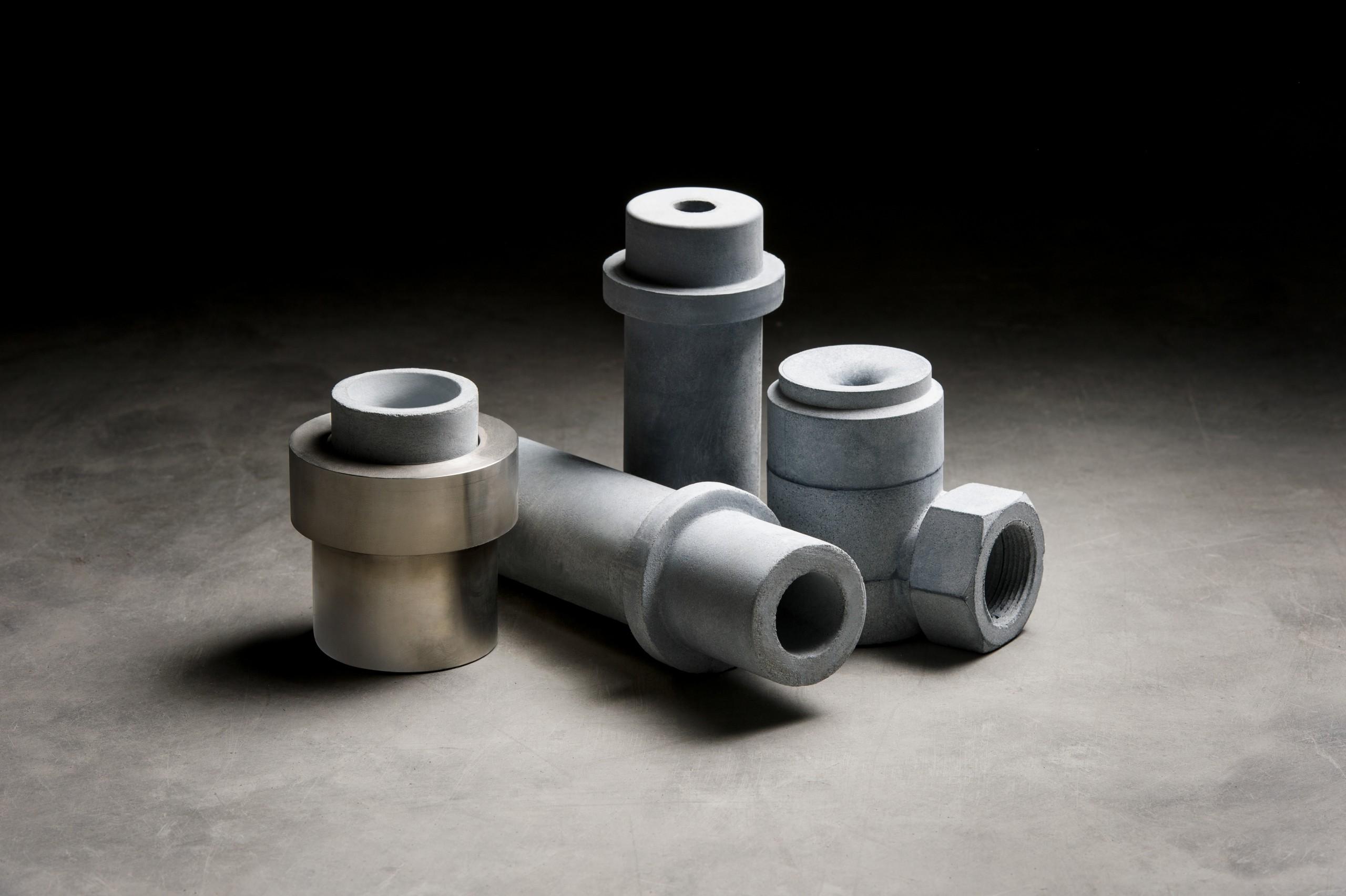
At the core of the distributor grid are air nozzles with carefully controlled orifice sizes. Traditionally, these nozzles are manufactured from metallic alloys such as 304H or chromoly steel. Over a typical FCCU campaign life of 5 to 20 years, continuous exposure to high temperatures, abrasive catalyst, and corrosive flue gases causes erosion that enlarges and distorts the orifices. This often results in a “keyhole” profile, which accelerates wear on adjacent nozzles and leads to non-uniform fluidization, inefficient regeneration, catalyst losses, and reduced unit performance.
Because the FCCU is a primary profit center of the refinery, converting lower-value heavy feeds into higher-value products like gasoline, maintaining regenerator efficiency and reliability is critical.
Advanced Ceramic Materials for FCCU Service
Ceramics are well known for superior abrasion resistance in FCCU applications, but not all ceramic materials perform equally. While silicon carbide is commonly specified, the casting method, bonding system, and microstructure play a critical role in performance. Fully dense ceramics can be susceptible to thermal shock, making the balance between abrasion resistance and refractoriness essential.
Blasch’s ALTRON™ and NITRON™ ceramic materials are engineered specifically for the demanding conditions of Fluid Catalytic Cracking Units. These materials have a proven track record in FCCU regenerators worldwide, providing excellent resistance to abrasion, corrosion, and thermal cycling under continuous operation.
Weldable Ceramic–Metal Assemblies
Ceramics cannot be welded directly to steel air grids. To address this, Blasch developed a proprietary metallic–ceramic assembly that allows FCC Air Distributor Nozzles to be welded directly in place. This design supports straightforward installation, replacement, and repair during turnarounds without requiring modifications to existing grid hardware.
Once installed, ALTRON™ assemblies typically last two to five times longer than high-alloy steel nozzles or many alternative ceramic designs, helping reduce maintenance frequency and unplanned downtime.
Key Features and Benefits
- Abrasion-resistant silicon carbide designed to support full FCCU campaign life
- Precision-cast orifices that maintain geometry and consistent airflow over time
- ALTRON™ and NITRON™ materials optimized for thermal shock resistance
- Robust weldable metallic–ceramic assemblies for ease of installation and maintenance
- Improved catalyst distribution and more stable regenerator operation
Custom Nozzle Solutions
Blasch specializes in custom ceramic nozzles engineered as direct replacements for metallic designs. Our manufacturing process allows us to replicate virtually any existing nozzle geometry while delivering the performance advantages of advanced ceramics. With more than 30 years of experience and successful installations in FCCUs worldwide, Blasch distributor grid nozzles provide consistent, predictable performance in critical refinery service.
For more information or to receive a quote for these products, contact us today.
Product Information Sheets
RELATED RESOURCES

Hard Choices
In the December issue of Hydrocarbon Engineering, Tim Connors, Ted Collins and Jeffrey Bolebruch of Blasch Precision Ceramics offer insights in material selection for abrasive applications with specific reference to the use of abrasion resistant alumina bonded silicon carbide air grid nozzles.